
The Cocoa Club
The History
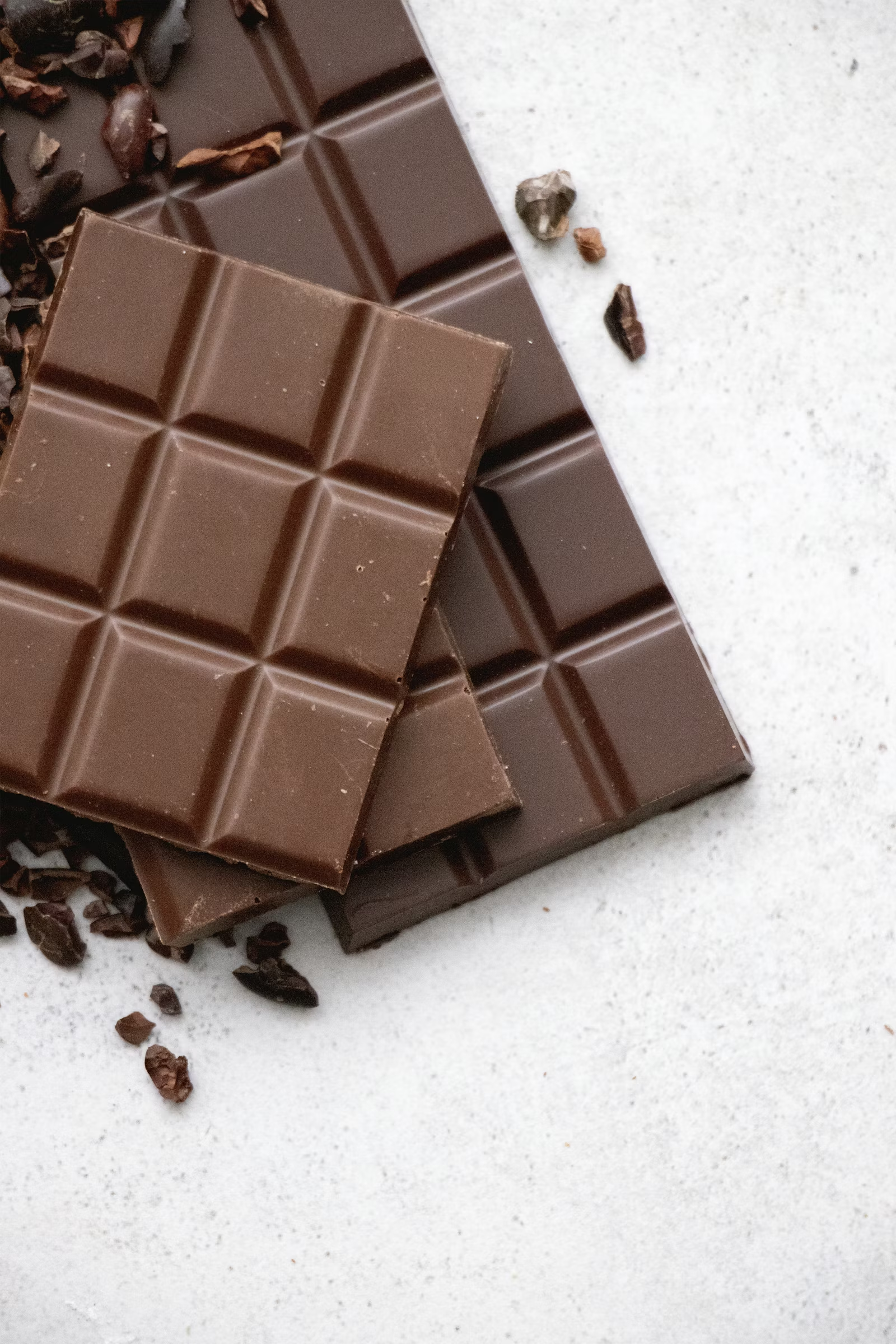
The Olmecs, living in Mesoamerica around 1500–400 BC, are believed to be the first humans to discover and consume cocoa. They initially consumed it as a spiced drink made from crushed cocoa beans. They likely learned its value by observing animals eating the fruit. Cocoa soon became deeply embedded in the cultures of the Mayans and Aztecs, who cultivated it, used it in rituals, and even adopted it as currency. Cocoa beans were considered sacred and symbolized abundance, used in offerings to deities and in royal funerals.
When Hernando Cortez encountered cocoa during his conquest of the Aztecs in the early 1500s, he brought it back to Spain in 1528, along with the tools to brew it. Though Christopher Columbus had seen cocoa earlier, he didn’t grasp its value. The Spanish court fell in love with the drink, sweetening it with cane sugar and spices. For years, Spain kept cocoa a secret, but by the late 1500s, it began to spread across Europe. Chocolate houses opened in France and England, and chocolate gradually evolved from an elite beverage to a popular treat.

Between the 17th and 19th centuries, chocolate expanded throughout Europe. Italy, France, and England embraced chocolate making, and innovations such as cocoa powder (1828), solid chocolate (1847), and milk chocolate (1830s) transformed it into a versatile product. Chocolate became increasingly commercialized, and its medicinal and nutritional properties gained recognition. Swiss chocolatiers like Nestlé and Lindt helped refine its taste and texture, laying the foundation for the global chocolate industry.
During the Industrial Era, production scaled dramatically. Factories opened in Spain, Germany, and Switzerland, and cocoa cultivation shifted from South America to Africa due to colonization. Africa eventually became the leading cocoa producer. Industrialization democratized chocolate, turning it from a royal luxury into an everyday indulgence. By the 20th century, chocolate was mass-produced and widely consumed, evolving into an essential part of global culture and cuisine—just as much a symbol of pleasure today as it was of power and reverence in ancient times.
Click on the image of the chocolate bars to learn more about the Aztecs and how they used chocolate.