The Cocoa Club
Interesting Facts
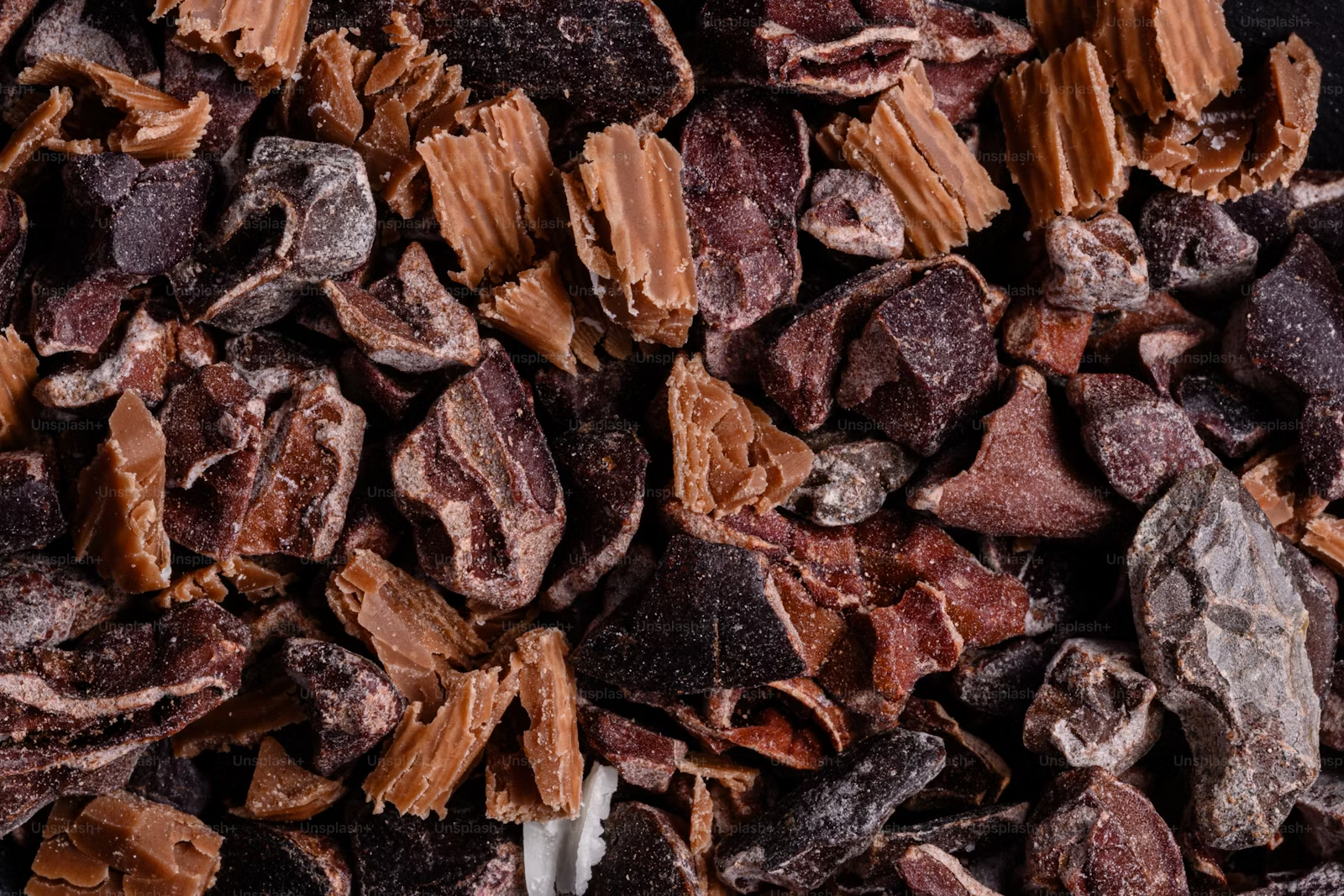
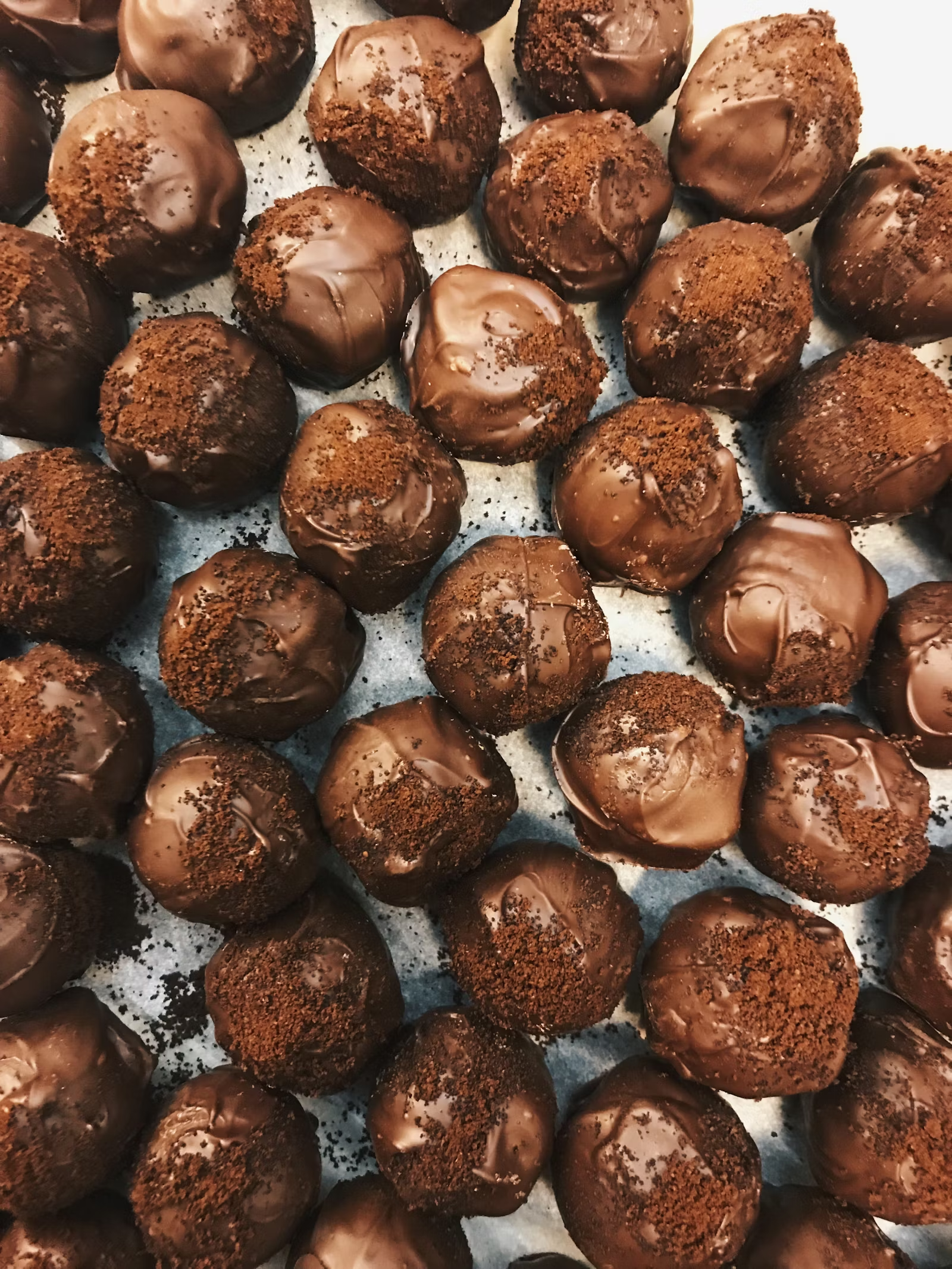
The cocoa bean is the seed of the cacao tree. According to the World Cocoa Foundation, people around the world consume more than 3 million tons of cocoa beans a year. Cocoa is the key ingredient in chocolate and chocolate confections, and chocolate is the most popular sweet treat in the world. Cocoa is also used in beverages and as a flavoring ingredient and has a long, interesting history.
- Cocoa has been around for thousands of years. Cacao residues on pottery in Ecuador suggest that the plant was consumed by humans as early as 5,000 years ago. It was widelycultivated more than 3,000 years ago by the Maya, Toltec, and Aztec peoples, who prepared a beverage using cocoa beans. Christopher Columbus took cocoa beans to Spain after his fourthvoyage in 1502, and the Spanish conquistadores, arriving in Mexico in 1519, were introduced to a chocolate beverage by the Aztecs.
- The first chocolate bar was created in 1847. In 1847, British chocolatier J.S. Fry and Sons created the first chocolate bar, molded from a paste made of sugar, chocolate liquor and cocoa butter. In 1876, Swiss chocolatier Daniel Peter added dried milk powder to chocolate to create milk chocolate, but it wasn’t until several years later that Peter and Henri Nestle created the Nestle Company and brought milk chocolate to the mass market.
- Chocolate is good for you. Dark chocolate is loaded with nutrients. Made from the seed of the cocoa tree, it is one of the best sources of antioxidants on the planet. Studies show that dark chocolate can improve your health and lower the risk of heart disease by improving blood flow and lowering your blood pressure. The flavonols in dark chocolate can protect against sun damage, improve blood flow to the skin and increase skin density and hydration. Cocoa may also significantly improve cognitive function in elderly people with mental impairments and improve verbal fluency.
- Cocoa was once used as currency. Cacao beans that grew in the equatorial region of Veracruz and Mexico were used as currency until 1737. “A turkey was 100 cacao beans,” says Cameron L. McNeil, author of Chocolate in Mesoamerica: A Cultural History of Cacao and an archaeologist at The Graduate Center at The City University of New York. To the Aztecs, Xocolatl [hot chocolate] was more valuable than gold or silver. When Montezuma was defeated by Cortez in 1519, the conquistadors searched his palace and found huge quantities of cocoa beans instead of gold, silver, or precious metals.
- The Swiss consume more chocolate per capita than any other nation on earth. The US accounts for 20% of world chocolate consumption, with 21% of cocoa imports. However, the Swiss consume more chocolate per person than any other nation, at 22 pounds per person. Americans consume 11 pounds per person. Despite producing most of the world’s cocoa, Africans account for only 3% of chocolate consumption each year.
- Cocoa beans are called “cocoa” beans and not “cacao” beans by mistake. The word “cacao”originates from the indigenous Nahuatl word “kakawatl.” Although Nahuatl was the language of the Aztecs (1300 AD), evidence suggests that kakawatl dates to the Olmec people, the earliest known major civilization in Mesoamerica (1500 BCE). When the Spanish arrived in the Americas, they translated the word “kakawatl” to “cacao.” The term “cocoa” originates from a spelling mistake when the English translated it from Spanish.